What Is BMI? Understanding Body Mass Index and Its Significance
Learn what BMI means, how BMI is calculated, BMI categories, health risks, limitations, and how to use a BMI calculator for weight-status screening.
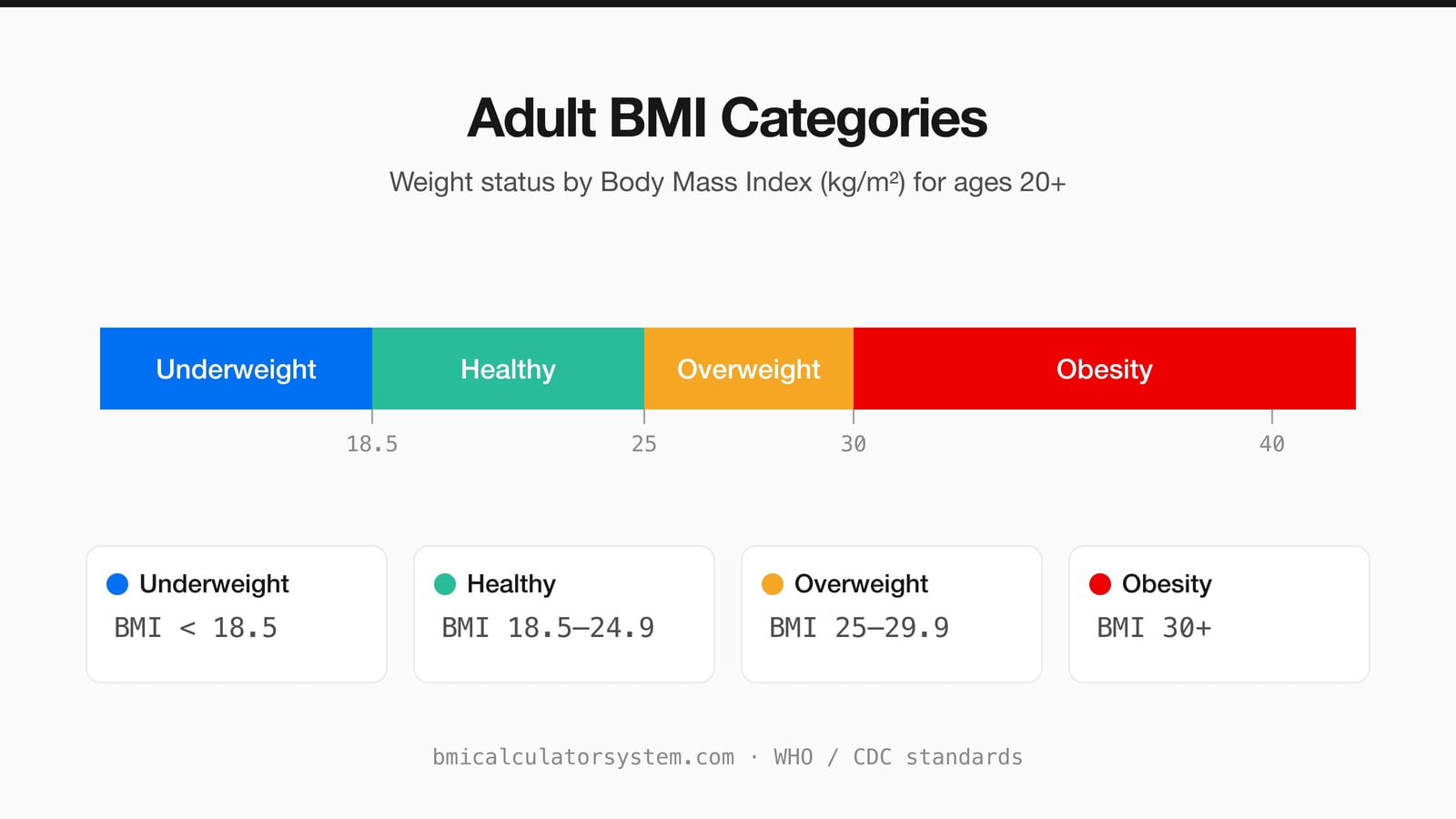
Body Mass Index (BMI) is a height-and-weight calculation used to estimate adult weight status. BMI helps categorize weight into underweight, healthy weight, overweight, and obesity ranges. A BMI calculator gives a quick result, but BMI is a screening tool, not a diagnosis.
According to the Centers for Disease Control and Prevention (CDC), BMI is a quick, low-cost screening measure for underweight, overweight, and obesity. BMI should be interpreted with blood pressure, cholesterol levels, medical history, physical examination, and other health information.
This guide explains what BMI is, how BMI calculation works, what BMI categories mean, where BMI has limitations, and how BMI can support health assessment.
Understanding BMI: Definition and Purpose
What Is BMI?
BMI is a numerical value calculated from a person’s weight and height. The BMI definition is simple: body weight divided by height squared.
For adults, BMI is used to classify weight status. A BMI category can show whether a person is underweight, in a healthy weight range, overweight, or within an obesity class. BMI does not directly measure body fat, muscle mass, bone density, or fat distribution.
BMI is useful because BMI requires only 2 measurements: height and weight. BMI is limited because 2 measurements cannot describe full body composition.
How Is BMI Calculated?
BMI is calculated with either metric units or U.S. customary units.
| Unit system | BMI formula |
|---|---|
| Metric | BMI = weight in kilograms ÷ height in metres squared |
| U.S. customary | BMI = weight in pounds ÷ height in inches squared × 703 |
Example metric calculation: a person weighs 70 kg and is 1.75 m tall.
BMI = 70 / (1.75 × 1.75)
BMI = 70 / 3.0625
BMI = 22.9
A BMI of 22.9 is in the healthy weight category for adults.
Example U.S. calculation: a person weighs 154 lb and is 69 in tall.
BMI = 154 / (69 × 69) × 703
BMI = 154 / 4,761 × 703
BMI = 22.7
A BMI calculator performs this formula automatically and shows the corresponding BMI category.
Origin and History of BMI
Body Mass Index developed from the Quetelet Index, a height-and-weight ratio associated with Belgian statistician Adolphe Quetelet in the 19th century. The measure later became widely used in population health because it offered a simple way to compare weight status across large groups.
BMI became common in medicine and public health because height and weight are easy to collect during routine health visits. Modern health organizations use BMI for screening, surveillance, and risk assessment, while recognizing that BMI alone cannot diagnose body fatness or disease.
BMI Categories and Their Meanings
BMI Ranges and Categories
The following BMI chart shows standard adult BMI categories used by the CDC and the National Heart, Lung, and Blood Institute (NHLBI). These adult categories apply to people aged 20 years and older.
| BMI range | BMI category | General meaning |
|---|---|---|
| Below 18.5 | Underweight | Weight is below the standard range for height |
| 18.5 to 24.9 | Healthy weight | Weight is within the standard range for height |
| 25.0 to 29.9 | Overweight | Weight is above the standard range for height |
| 30.0 or greater | Obesity | Weight is substantially above the standard range |
| 30.0 to 34.9 | Class 1 obesity | First obesity classification |
| 35.0 to 39.9 | Class 2 obesity | Second obesity classification |
| 40.0 or greater | Class 3 obesity | Severe obesity classification |
According to the World Health Organization (WHO), adult overweight begins at BMI 25, and adult obesity begins at BMI 30.
Interpreting Your BMI Category
A BMI category gives a general weight-status signal. A healthy weight BMI often indicates lower weight-related risk, but the result does not guarantee complete metabolic health. An overweight or obesity BMI often indicates higher risk, but the result does not identify body fat percentage or disease by itself.
A BMI below 18.5 can indicate underweight. Underweight status can be associated with inadequate nutrition, reduced muscle stores, low energy availability, or an underlying health condition.
A BMI from 18.5 to 24.9 is the standard healthy weight range for adults. This range is useful for screening, but health still depends on blood pressure, blood glucose, cholesterol, sleep, physical activity, diet quality, and medical history.
A BMI from 25.0 to 29.9 is categorized as overweight. This category can reflect excess body fat in many adults, but it can also reflect higher muscle mass in some people.
A BMI of 30.0 or greater is categorized as obesity. Obesity classes help healthcare providers estimate risk level and decide whether additional assessment is needed.
Limitations and Considerations of BMI
What BMI Does Not Measure
BMI does not measure 6 important health attributes:
- Body fat percentage
- Muscle mass
- Bone density
- Waist circumference
- Fat distribution
- Metabolic health markers
According to the CDC, BMI does not distinguish between fat, muscle, and bone mass. BMI also does not show where body fat is carried. Abdominal fat distribution can matter because waist circumference and waist-to-hip ratio provide additional information about cardiometabolic risk.
BMI is best used as a starting point. BMI is weaker when used as the only measure of health.
Populations Where BMI May Be Less Accurate
BMI can be less accurate for several populations, including athletes, older adults, pregnant women, children, and some ethnic groups.
Athletes can have a higher BMI because muscle tissue increases body weight. A strength athlete with low body fat can fall into the overweight category because BMI does not separate muscle from fat.
Older adults can have a normal BMI but reduced muscle mass and higher body fat percentage. Age-related muscle loss changes body composition without always changing BMI.
Pregnant women need pregnancy-specific weight guidance. Standard adult BMI categories do not assess pregnancy weight status during pregnancy.
Children and teens are not assessed with the fixed adult cut-offs at all. Their BMI is interpreted using age- and sex-specific percentiles from CDC growth charts — you can use our children’s BMI calculator to get a child’s BMI-for-age percentile for ages 2–20.
Different ethnic groups can experience health risk at different BMI levels. Some Asian populations develop diabetes and cardiovascular risk at lower BMI values than the standard adult cutoff points. Healthcare providers may use additional measurements for a more complete assessment.
Comparing BMI with Other Measures
BMI works best with complementary body composition and health measures.
| Measure | What it adds |
|---|---|
| Waist circumference | Estimates abdominal fat distribution |
| Waist-to-hip ratio | Compares abdominal size with hip size |
| Body fat percentage | Estimates fat mass compared with total weight |
| Blood pressure | Shows cardiovascular strain |
| Blood glucose | Helps identify diabetes or prediabetes risk |
| Cholesterol panel | Shows lipid-related heart risk |
BMI answers one question: “What is weight status based on height and weight?” Other measures answer different questions about fat distribution, metabolic health, and cardiovascular risk.
BMI and Health: Why It Matters
Health Risks Associated with High or Low BMI
BMI matters because weight status is associated with health risk. According to the CDC, people with overweight or obesity have increased risk for high blood pressure, dyslipidemia, type 2 diabetes, coronary heart disease, stroke, gallbladder disease, osteoarthritis, sleep apnea, some cancers, lower quality of life, depression, anxiety, body pain, and difficulty with physical functioning.
According to WHO, higher-than-optimal BMI contributed to an estimated 3.7 million deaths from noncommunicable diseases in 2021. These diseases include cardiovascular disease, diabetes, cancers, neurological disorders, chronic respiratory diseases, and digestive disorders.
Low BMI matters as well. A BMI below 18.5 can indicate insufficient weight for height. Underweight status deserves attention when it occurs with fatigue, appetite loss, unintentional weight loss, menstrual changes, frequent illness, digestive symptoms, or weakness.
Using BMI to Guide Lifestyle Choices
BMI can guide lifestyle decisions when BMI is interpreted with other health information.
Use BMI to support 5 practical steps:
- Measure height and weight accurately.
- Calculate BMI with a reliable BMI calculator.
- Review the BMI category without treating the category as a diagnosis.
- Compare BMI with waist circumference, blood pressure, glucose, cholesterol, activity level, and diet quality.
- Discuss concerning results with a healthcare provider.
Healthy BMI management usually includes nutrient-dense eating, regular physical activity, adequate sleep, stress management, and medical support when needed.
For eating habits, focus on vegetables, fruits, whole grains, lean proteins, legumes, nuts, and unsaturated fats. For physical activity, combine aerobic activity with muscle-strengthening exercise. For clinical care, ask a licensed healthcare provider about safe weight gain, weight loss, or weight maintenance targets.
When to Consult a Healthcare Provider
Consult a healthcare provider when BMI is below 18.5, BMI is 30 or greater, weight changes quickly without explanation, or BMI is paired with symptoms such as chest pain, shortness of breath, fatigue, swelling, dizziness, irregular periods, poor appetite, or frequent illness.
Medical advice is important when a person has diabetes, high blood pressure, heart disease, kidney disease, pregnancy, eating disorder history, or medication-related weight change.
BMI results should guide a conversation, not replace a medical evaluation.
Calculate Your BMI
Ready to check your number? Our free, private BMI calculator returns your BMI and adult weight-status category instantly — your height and weight never leave your browser. For kids and teens, use the children’s BMI calculator instead, which uses CDC percentiles for ages 2–20.
BMI is a screening measure and is not a substitute for professional medical advice.
FAQ About BMI
What is BMI in simple terms?
BMI is a number calculated from height and weight. BMI estimates adult weight status and places the result into underweight, healthy weight, overweight, or obesity categories.
Is BMI a body fat measurement?
No. BMI does not directly measure body fat. BMI estimates weight status from height and weight, while body fat percentage, waist circumference, and clinical tests provide more body composition detail.
What is a healthy BMI?
A healthy adult BMI is 18.5 to 24.9. This range applies to most adults aged 20 years and older, but health status depends on other factors such as blood pressure, cholesterol, glucose, fitness, and medical history.
What BMI is considered overweight?
A BMI from 25.0 to 29.9 is considered overweight for adults. A BMI of 30.0 or greater is categorized as obesity.
What BMI is considered underweight?
A BMI below 18.5 is considered underweight for adults. Underweight results should be discussed with a healthcare provider when the result is linked to symptoms, poor appetite, or unintentional weight loss.
Can BMI be wrong?
Yes. BMI can misclassify some people because BMI does not measure muscle mass, bone density, body fat percentage, age-related body composition, pregnancy status, or fat distribution.
Who should not rely on BMI alone?
Athletes, older adults, pregnant women, and people from ethnic groups with different cardiometabolic risk patterns should not rely on BMI alone. These groups benefit from waist measurements, body composition review, and clinical evaluation.
How often should BMI be checked?
Adults can check BMI during routine health reviews or after meaningful weight change. Frequent BMI checking is not necessary unless a healthcare provider recommends regular monitoring.
Summary of What BMI Means
BMI, or Body Mass Index, is a height-and-weight screening tool that helps classify adult weight status. BMI calculation is simple, BMI categories are easy to interpret, and a BMI calculator gives fast results. BMI has limitations because BMI does not measure body fat distribution, muscle mass, bone density, age, sex, pregnancy status, or complete metabolic health.
Use BMI as a first signal. Use medical history, waist circumference, blood pressure, glucose, cholesterol, physical activity, diet quality, and healthcare guidance for a complete health assessment.
Sources
Check your own number.
Free, instant, and private — your inputs never leave your browser.
Calculate your BMI